Comparisons
Deadlock vs Deadlatch: Which Suits Your Door?
Deadlocks and deadlatches look alike but behave very differently. Learn how each works, which suits your front door, and the safe-exit question to ask first.
· 8 min read · By Locksmith Hornsby Service
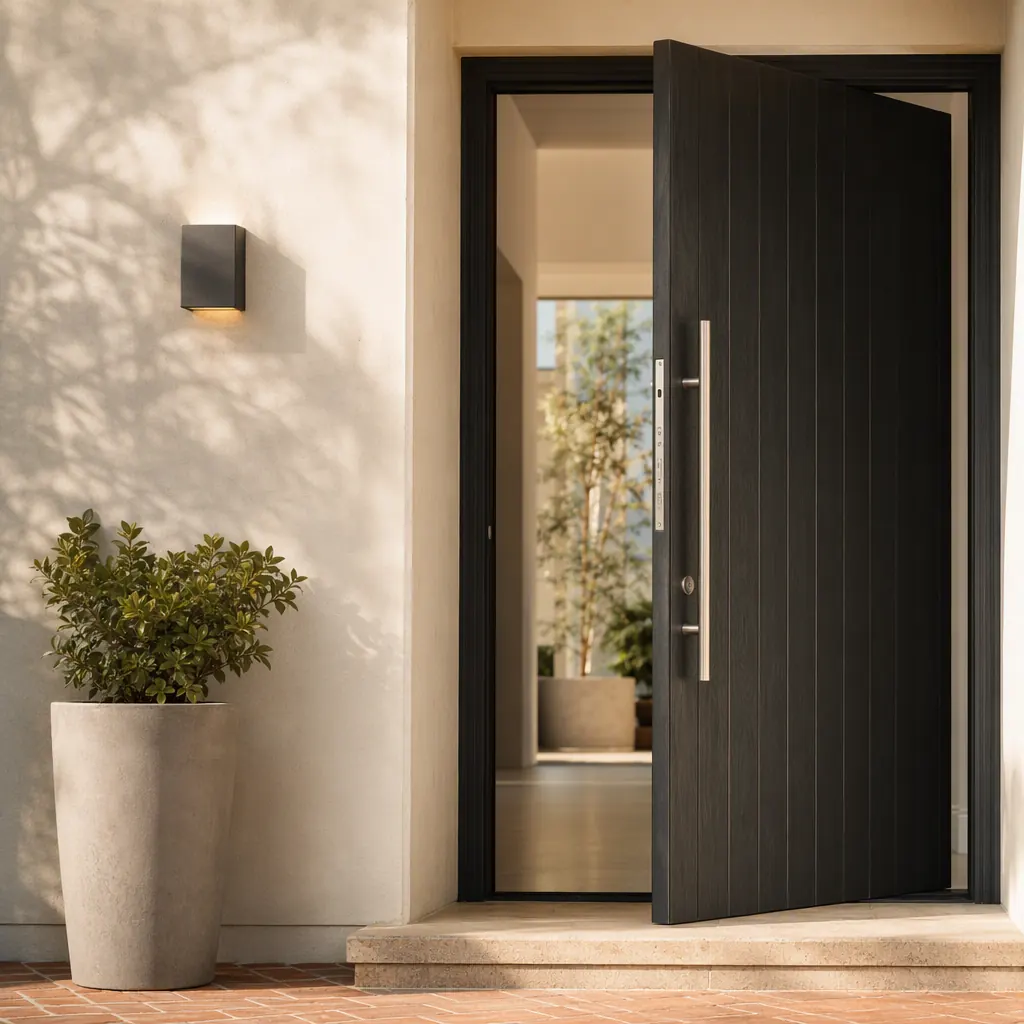
Walk down any street in Hornsby and you will see two very common front door arrangements. One is a lever or knob handle with a separate lock above it. The other is a single rim lock on the inside of the door with a key cylinder on the outside. People call both of them "deadlocks", but often one of them is actually a deadlatch, and the difference matters for both security and safety.
This guide explains how deadlocks and deadlatches work, where each one makes sense, and the questions you should ask before choosing one for your front door.
The short answer
- A deadlatch locks automatically when the door closes. It has a latch bolt that springs into the frame, plus a mechanism that stops that bolt being pushed back once the door is shut. You usually open it from inside by turning a knob or handle, and from outside with a key.
- A deadlock has a bolt that you throw deliberately, with a key or a turn snib. It does not lock just because the door closes. Once thrown, the bolt cannot be pushed back by force on the bolt itself.
Both are far better than a plain spring latch on its own. Which one is right depends on how your door is used, who lives in the house, and whether you want the door to lock itself.
How a deadlatch works
A deadlatch is a self-locking latch. When you close the door, a small auxiliary bolt (sometimes called a trigger or guard bolt) is pressed in by the strike plate. That action "deadlocks" the main latch bolt, so it cannot be slipped back with a card or thin tool from outside.
From inside, you normally open it with a turn knob or handle. Many deadlatches also have a key-locking function on the inside knob, which stops the knob being turned until you unlock it with the key.
Advantages
- The door locks every time it closes, so you never forget to lock it.
- Easy and quick to exit from inside if the inside knob is not key-locked.
- Common on older Australian homes, so replacement parts and compatible hardware are widely available.
Limitations
- Because it locks automatically, it is easy to lock yourself out by stepping outside without your keys. Deadlatches are behind a large share of the lockouts we attend. See our lockout service for how we handle those.
- The strength depends heavily on correct installation. If the strike plate is misaligned, the auxiliary bolt may not engage, and the latch is no more secure than an ordinary spring latch.
How a deadlock works
A deadlock is a separate bolt that you throw deliberately. On most homes it sits above a handle set, and the handle only operates the everyday latch. To lock the door properly, you turn the key or the inside snib to throw the deadbolt into the frame.
Deadlocks come in several variations:
- Single-cylinder deadlocks have a key outside and a turn snib inside. You can always get out without a key.
- Double-cylinder deadlocks need a key on both sides. Nobody can exit without the key once it is locked.
- Mortice deadlocks sit inside a pocket cut into the door edge, common on solid timber doors and older homes.
Advantages
- A thrown deadbolt is very hard to force back.
- The door does not lock itself, which reduces accidental lockouts.
- Paired with a separate latch, it gives two independent points of security.
Limitations
- You have to remember to lock it.
- Double-cylinder versions can trap people inside during a fire or emergency if the key is not to hand.
The safe-exit question you should ask first
This is the part people often overlook. A lock that needs a key from the inside can stop someone leaving quickly in an emergency. Think about young children, older relatives, visitors who do not know where the key is kept, and people waking in the night to smoke.
For most family homes, we recommend locks that allow exit from inside without a key, such as a single-cylinder deadlock with a turn snib, or a deadlatch that is left unlocked on the inside while people are home. Where a double-cylinder lock is chosen for a specific reason, such as a glass panel near the lock, we talk through where the key will be kept and who in the household can reach it.
We raise this every time we install or replace a front door lock, because it is a safety decision as well as a security one. Our door lock installation service and lock replacement service pages explain how we approach it.
Which one suits your door?
There is no single right answer, but these patterns come up again and again.
A busy family front door. Many families prefer a quality lever set with a separate single-cylinder deadlock. During the day the latch holds the door closed; at night or when everyone leaves, the deadbolt is thrown. It reduces accidental lockouts and gives a strong locked state.
An older timber door with a rim lock. Many older Hornsby and Wahroonga homes have a rim deadlatch on the inside of a solid timber door. A good-quality deadlatch, properly aligned, can be a sound choice here, and it preserves the look of the door. Adding a separate deadlock above can strengthen it further if the door allows.
A back or side door. These doors are often used less and are out of view from the street. A deadlock is usually the better choice, because it gives a strong locked state and does not rely on someone remembering to set an inside knob.
A rental property. Simpler arrangements with fewer keys are easier for tenants and agents. Keying the deadlock and the screen door alike helps, and rekeying between tenancies keeps things under control. See our residential locksmith service.
A unit or apartment door. Many unit doors carry fire-rated hardware that must allow exit without a key. Changes to these doors need care, and some buildings have bylaws about what can be fitted.
Installation matters as much as the lock
Whichever you choose, the lock is only as good as the way it is fitted. Three things make the biggest difference:
- The strike plate. It should be aligned so the bolt seats fully, and fixed with screws long enough to reach the wall framing, not just the soft door trim.
- Door alignment. A door that has dropped on its hinges stops a deadbolt throwing fully and stops a deadlatch's auxiliary bolt engaging. Re-fixing hinges is often the cheapest real improvement.
- The door itself. A strong lock on a hollow or damaged door gives limited protection.
Our security locksmith service covers checking all three together.
Should you replace a deadlatch with a deadlock?
Not necessarily. If your deadlatch is good quality, properly installed and you like that it locks automatically, keeping it is perfectly reasonable. Rekeying it after moving in is often all you need.
You might consider adding or switching to a deadlock if:
- you keep getting locked out by a self-locking door;
- the deadlatch is worn, cheap or no longer engages its auxiliary bolt;
- you want a second, independent locking point on the door.
A side-by-side comparison
If you prefer to see the differences at a glance, here is how the two compare on the points people ask about most.
Locking. A deadlatch locks itself when the door closes. A deadlock locks only when you throw the bolt.
Accidental lockouts. More likely with a deadlatch, because it locks behind you. Less likely with a deadlock, because the door does not lock itself.
Forgetting to lock. Not possible with a deadlatch. Possible with a deadlock, so the household needs the habit of locking it.
Exit in an emergency. Usually easy with a deadlatch, unless the inside knob has been key-locked. Easy with a single-cylinder deadlock. Slow with a double-cylinder deadlock if the key is not to hand.
Look. A rim deadlatch is visible on the inside face of the door, which suits many older homes. A deadlock is usually a compact unit above the handle, which suits most modern doors.
Installation. Both depend on a correctly aligned strike fixed into solid timber. A deadlatch also depends on its auxiliary bolt being pressed in by the strike, so alignment is especially important.
Common mistakes we see
Over years of working on Hornsby front doors, the same few mistakes come up again and again.
Leaving the inside knob of a deadlatch key-locked while people are home. It turns a convenient lock into a trap during an emergency. Lock the inside knob only when the house is empty.
Relying on a deadlatch whose auxiliary bolt never engages. If the strike plate has moved, the auxiliary bolt may sit in the strike opening rather than being pressed in. The latch then behaves like a plain spring latch. A simple test: close the door gently and try to push the latch bolt back with a fingertip from the edge. If it moves, the deadlatch is not working as intended.
Fitting a deadlock and never using it. A deadlock only helps when it is thrown. If the household habitually leaves it open, a good deadlatch might be the more practical choice.
Adding more locks instead of fixing the door. Three locks on a door that has dropped on its hinges will all struggle. Fix the door first.
Cutting a new hole for every new lock. Each new cut weakens the door. Where possible, choose hardware that fits the existing preparation. Our lock replacement service explains how we approach this.
Getting advice on your front door
If you are not sure what you have or what would suit your door best, a short call is usually enough to point you in the right direction. Photos of the inside and outside of the lock help.
Locksmith Hornsby Service is based at 14 Hunter St, Hornsby NSW 2077, open 7 days, 7:00am to 12:00am. Call 02 4404 0445 or request a quote through our contact page. We will explain the options for your door, including the safe-exit question, before anything is fitted.
- deadlock
- deadlatch
- front door locks
- home security
Talk to a Hornsby locksmith
Call 02 4404 0445 (open 7 days, 7:00am – 12:00am) or request a quote online.